
CHELSEA CATTROLL
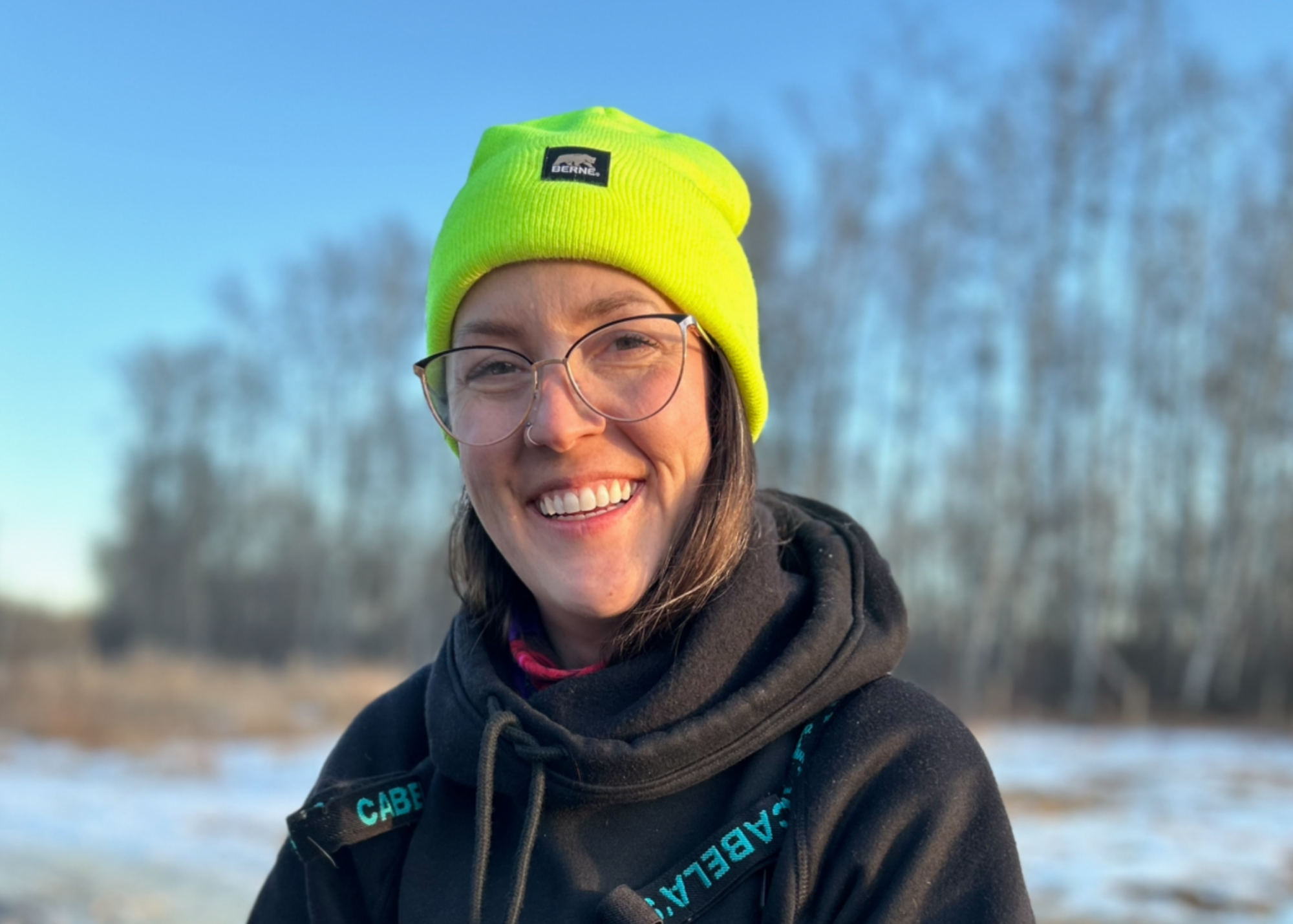
COMMUNITY LEADER| KNOWLEDGE KEEPER
ROLE: Land-Based Learning Specialist
NATION: Peerless Trout First Nation
SCHOOLS: Little Buffalo School (Lubicon Lake Band #453), Atikameg School (Whitefish Lake First Nation), Elizabeth Quintal School and Kateri School (Peerless Trout First Nation), and Clarence Jaycox (Loon River First Nation)
DIVISION: Kee Tas Kee Now Tribal Council Education Authority (KTCEA) School Division
As a Knowledge Keeper and land-based learning specialist working across five northern First Nations in Alberta, Chelsea Cattroll supports youth in strengthening their connection to the land, their communities, and themselves. By creating space for shared experiences on the land, she helps youth build confidence, a sense of belonging, and pride in the places they call home.
Chelsea’s journey into land-based education began as a physical education teacher in Peerless Trout First Nation. It was in these early years that she began exploring new ways to engage students, especially those who didn’t see themselves in sports or physical education settings. What she witnessed she describes as something “kind of magical,” where initial uncertainty transformed into curiosity and joy.
“Chelsea is a steward of the land and she passes this down to the youth of KTCEA through engaging, fun, and memorable moments.”
“Spirit North creates a unique environment where students who are typically shy or reserved feel safe enough to 'come out of their shell' and embrace an enthusiasm for learning,” she says. “They develop grit and perseverance, and the resulting sense of accomplishment provides a massive boost to their self-esteem and social confidence.”
At the core of Chelsea’s approach is a belief that connection to the land is foundational. She emphasizes that young people need opportunities to experience the spaces around them in meaningful ways.
Through lived experiences, such as canoeing on local waterways or playing traditional games, youth learn about what’s in their own backyard, develop a sense of love and care for the land, and carry those teachings forward across generations. “When physical activity is land-based and culturally grounded, it ceases to be just 'exercise' and becomes a tool for building social cohesion and shared joy.”
Chelsea also highlights the importance of relationships and shared effort in this work. Supporting multiple schools across remote communities can be complex, but collaboration with organizations like Spirit North allows the work to grow in depth and reach. “In my experience with Spirit North, the impact of physical activity acts as a catalyst for community-wide wellness. The programming creates an invitation that brings in staff and community members who might otherwise not participate. This collective movement fosters intergenerational connection where elders, teachers, and youth share the land together,” she says.
What continues to inspire her are the small, powerful moments that unfold on the land. Peers helping each other up after a fall. Laughter shared over something unexpected. These moments, while simple, represent something much larger—a shift in how young people see themselves and their place in the world.